Introduction
Recovery of rangelands and forests following wildfire is a multi-year ecological process rather than a rapid event. Vegetation response is governed by interacting factors, including precipitation, soils, burn severity, pre-fire rangeland health, and subsequent management.
All of Nebraska’s ecosystems developed with fire as a recurring disturbance, contributing to a level of ecological resilience that is often greater than commonly assumed. Observations following over 1,300 wildfires across Nebraska and the Great Plains show that grassland community recovery is expected—but local exceptions can occur – and the novel conditions surrounding the 2026 wildfires warrant close post-wildfire monitoring to ensure response trajectories are consistent with past observations.
Recovery Over Time
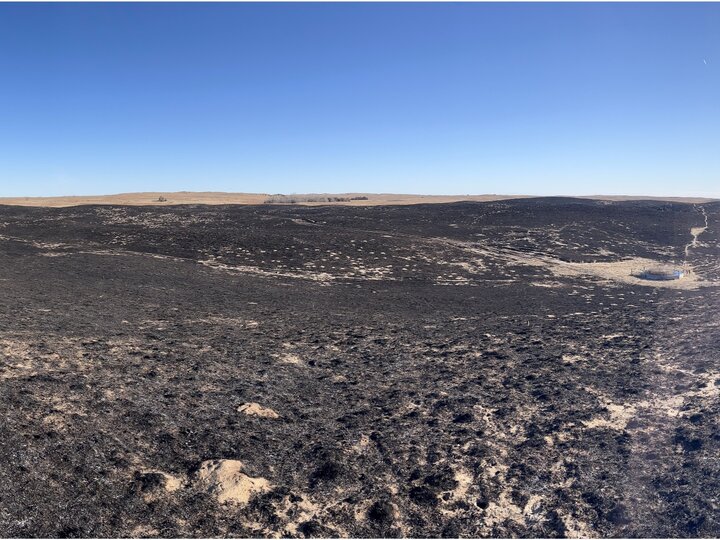
Days to weeks
Aboveground vegetation is removed, but recovery depends on survival of belowground plant structures. Soils are exposed to wind, and localized movement can occur - especially in sandy areas.
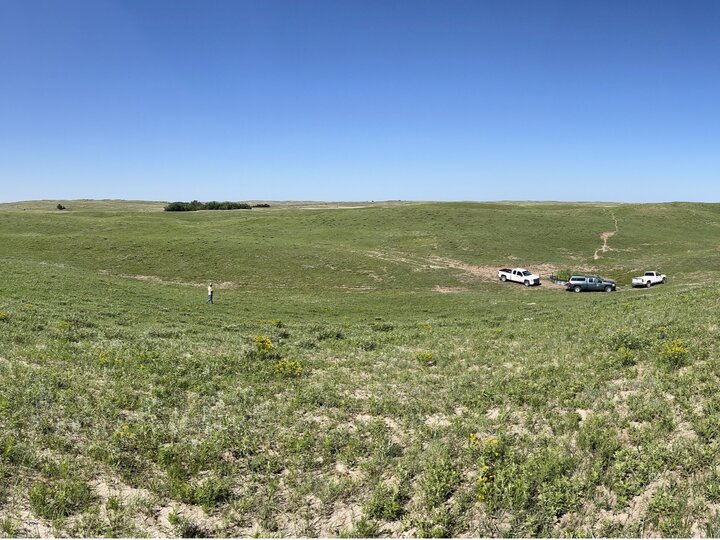
Weeks to months
Vegetation response begins when precipitation occurs. Rainfall timing and amount are the primary controls on early recovery. Even modest rainfall can initiate regrowth and primary production.
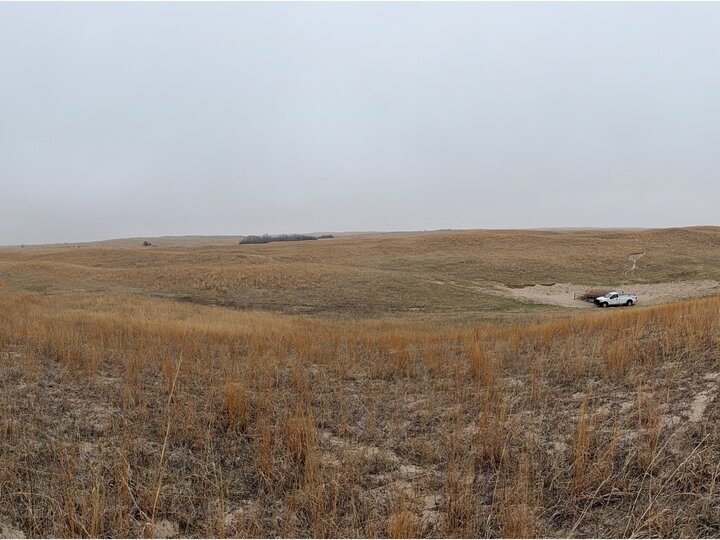
Seasons to years
Plant communities re-establish over multiple growing seasons. Recovery is expected, but the rate and trajectory vary, depending on multiple interacting site, weather, and management factors.
Examples from Past Wildfires

Key Questions
Key Questions
When will grass come back?
Grass response can begin relatively quickly following wildfire when precipitation occurs and growing points remain intact belowground.
Research across Nebraska and more than 1,300 wildfires in the Great Plains shows that recovery in rangeland systems is typically driven by surviving perennial root systems rather than new establishment. Early-season rainfall—particularly in late April through early June—often determines whether regrowth begins rapidly or is delayed.
Early green-up should not be interpreted as full recovery. Sustained growth is required through the season and multiple vegetation characteristics respond over multiple years to define post-fire response.
How much rainfall is needed?
Post-fire precipitation is the primary control on early recovery. The amount and timing of rainfall determine the rate of grasses regrowth and how quickly aboveground cover develops.
Research in Sandhills soils shows that relatively small precipitation events can recharge the primary rooting zone. In many cases, approximately one inch of rainfall is sufficient to initiate primary growth early in the growing season.
How long will recovery take?
Recovery occurs over multiple growing seasons. Initial regrowth may occur in the first year, but full recovery of plant cover and ecosystem function depends on precipitation patterns and site conditions.
Herbaceous cover typically returns first and most rapidly, often led by forbs (wildflowers) followed by prairie grasses. In contrast, litter accumulation and full ground cover can take several years to re-establish.
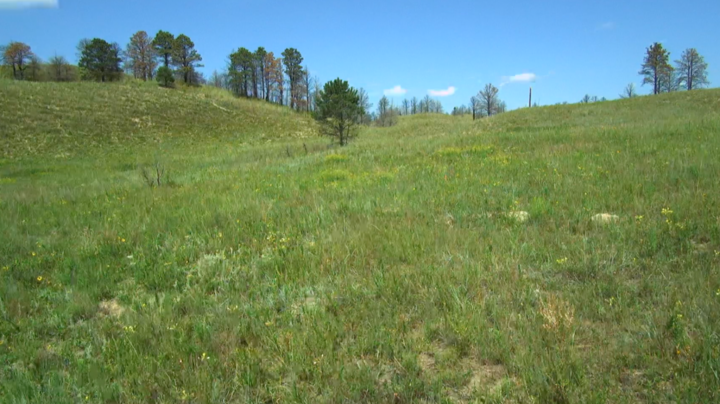
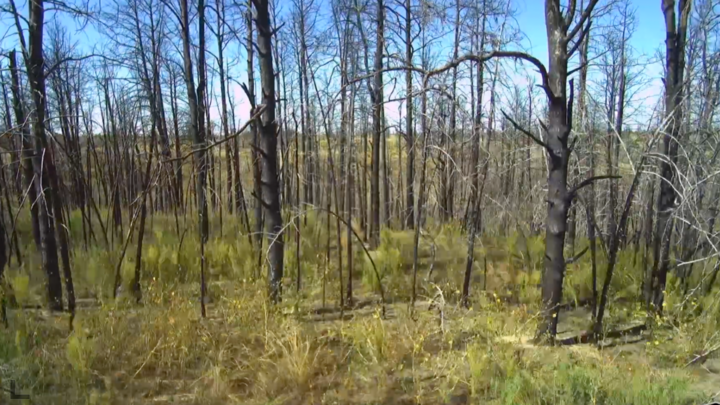
Areas dominated by grasses generally recover more quickly than areas with trees. In the Sandhills, grasslands are stabilized by dense root systems, while patches of cedar and other woody vegetation do not provide the same soil stability and may take longer to recover following fire. This pattern has been observed in multiple post-wildfire studies.
In other regions, such as the Loess Canyons, burned cedar areas can act as localized zones of soil redistribution. However, ranchers in this region have a long history of fire-based restoration, and land managers often prioritize landscape-scale efforts rather than more localized impacts. Several research studies show that these areas eventually transition to herbaceous dominance following fire-based restorations and similar trajectories are expected following the wildfire in the Loess Canyons.
- See ongoing wildfire research at the Nebraska National Forest, at Halsey, NE.
- Wildfire, drought, and recovery
Will all areas recover the same way?
No. Recovery depends on pre-fire rangeland condition, soil properties, and burn severity.
In intact Sandhills grasslands, dense root biomass concentrated in the upper soil profile stabilizes the system and supports recovery following disturbance.
In contrast, areas without well-established perennial grasses—such as cropland, construction sites, or heavily disturbed areas—may respond differently and face a greater risk of erosion.
How does the rate of recovery impact grazing options?
Grazing decisions following wildfire depend primarily on how quickly vegetation recovers, which is strongly controlled by post-fire precipitation.
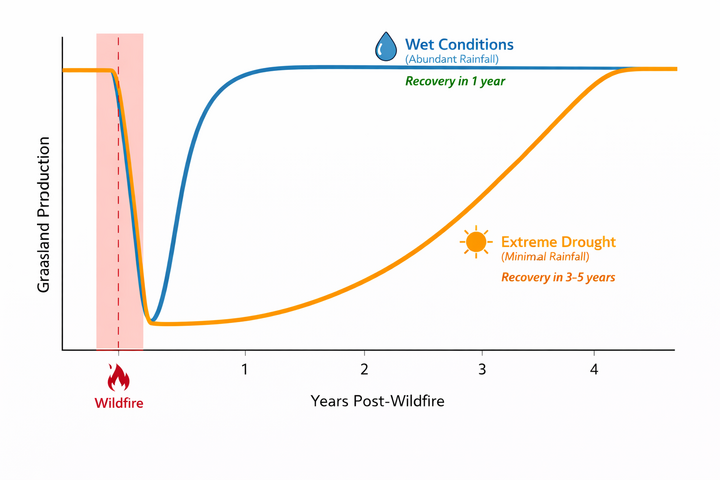
Research and field observations show that recovery can follow different pathways. Under favorable conditions with adequate rainfall, grassland production can recover within the first growing season. Under prolonged dry conditions, recovery may take several years.
This creates a range of possible grazing pathways:
- Faster recovery (wet conditions):
Vegetation can recover within one growing season. Earlier return to grazing may be possible, depending on plant development and site conditions. - Slower recovery (dry conditions):
Vegetation recovery may take 3–5 years, requiring extended rest or reduced stocking to allow plant communities to re-establish.
These pathways represent a range of plausible outcomes. Grazing decisions should follow observed recovery, not predetermined schedules. Conditions observed in the first growing season—especially precipitation—provide important signals for adjusting grazing plans.
What is the risk of erosion after wildfire?
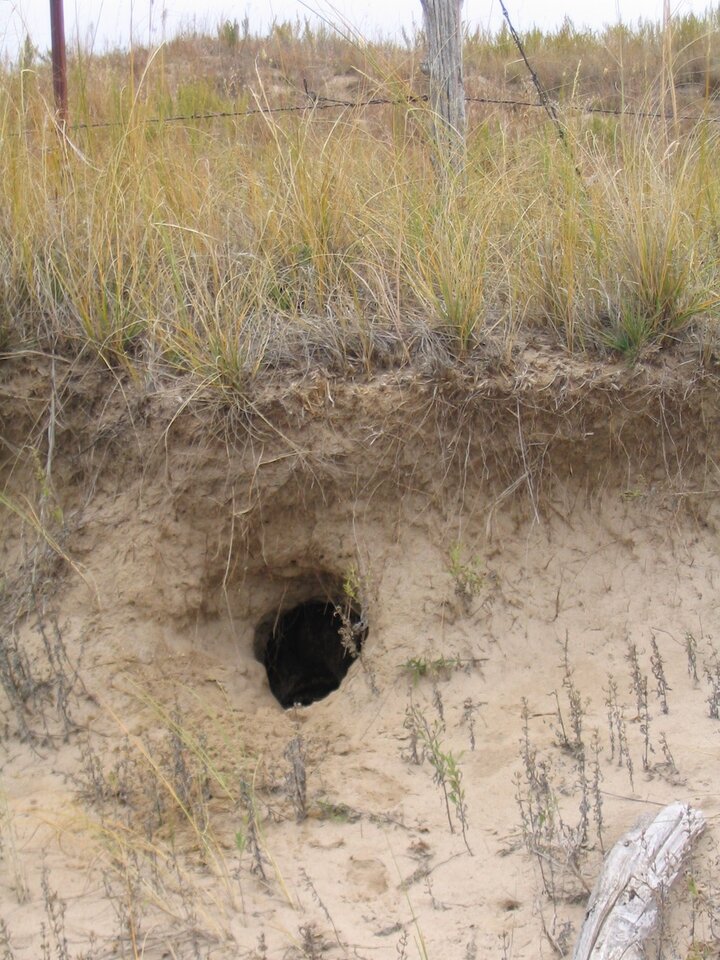
Localized erosion risk is highest immediately after fire when soils are exposed and vegetation cover is reduced. In the Sandhills, this risk depends strongly on whether the belowground root system remains intact.
In intact rangeland, dense root biomass stabilizes the soil surface, and erosion is typically limited to localized sand movement. However, in areas without established perennial grasses, high winds can move large volumes of sand over short periods.
Risk is greatest in early spring. April is typically the windiest month in the Sandhills, with March and May also experiencing strong winds. These conditions occur before consistent precipitation and vegetation regrowth, increasing the likelihood of soil movement.
In these areas, reseeding alone is often insufficient. Without surface protection, seed can be lost to wind before establishment. Physical erosion control (e.g., mulch, hay, or barriers) may be required.
What would it take for Sandhills prairie to become destabilized?
A transition from a stabilized, vegetated Sandhills prairie to a destabilized, actively moving and permanently unvegetated sand surface requires the loss of the belowground root system that anchors the soil. In intact rangeland, dense root biomass stabilizes the sand and prevents large-scale movement—even after fire.
Experimental work in the Sandhills demonstrates how difficult this transition is to induce. In a controlled destabilization study, vegetation was removed using herbicide, and it required approximately four years of root decomposition before the soil surface transitioned from stable to destabilized state and began to move.
This indicates that fire alone is not sufficient to initiate widespread dune movement in healthy rangeland. Destabilization is most likely where perennial vegetation and root systems are absent or severely reduced. Short-term exposure following wildfire may result in localized sand movement, but does not typically lead to large-scale dune destabilization.
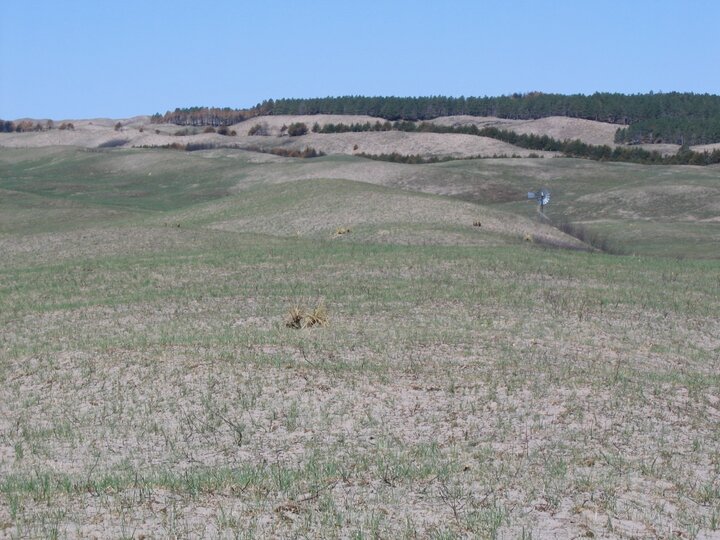
Why is post-wildfire monitoring important?
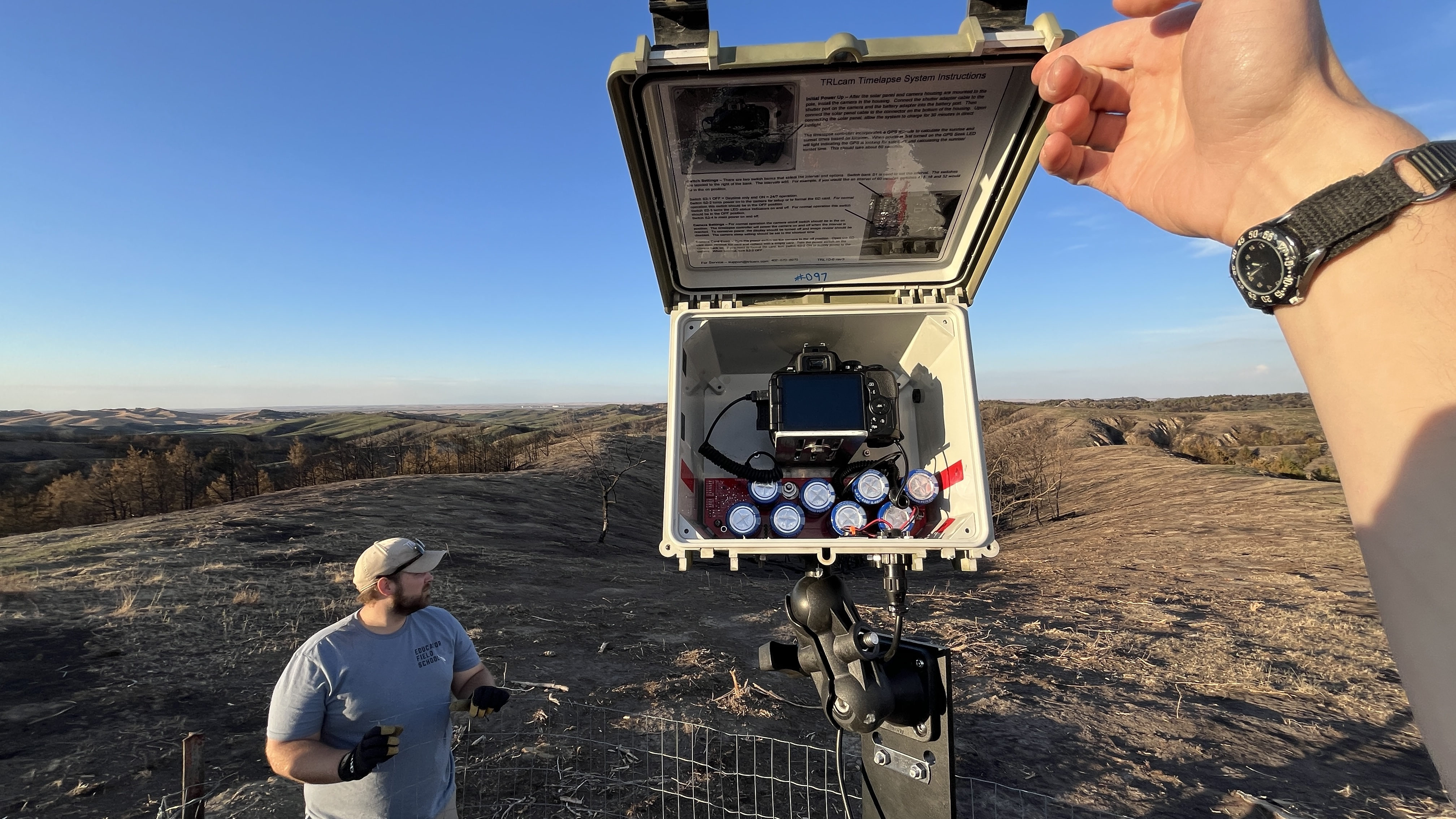
Post-wildfire monitoring is essential to ensure that recovery is proceeding as expected and to identify areas where conditions may diverge from typical patterns. While research shows that recovery is generally expected, the scale of the 2026 wildfires and recent climate conditions introduce additional uncertainty. In this situation, it is important to compare vegetation recovery to established expectations so that more timely, adaptive measures can be taken where necessary.
For more information, contact UNL’s Wildfire Monitoring Network, which was recently established to better connect research, extension, landowners, and other partners to strengthen engagement, response, and adaptive capacity following extreme wildfire events in the state.